 Jerusalem Israel Tours
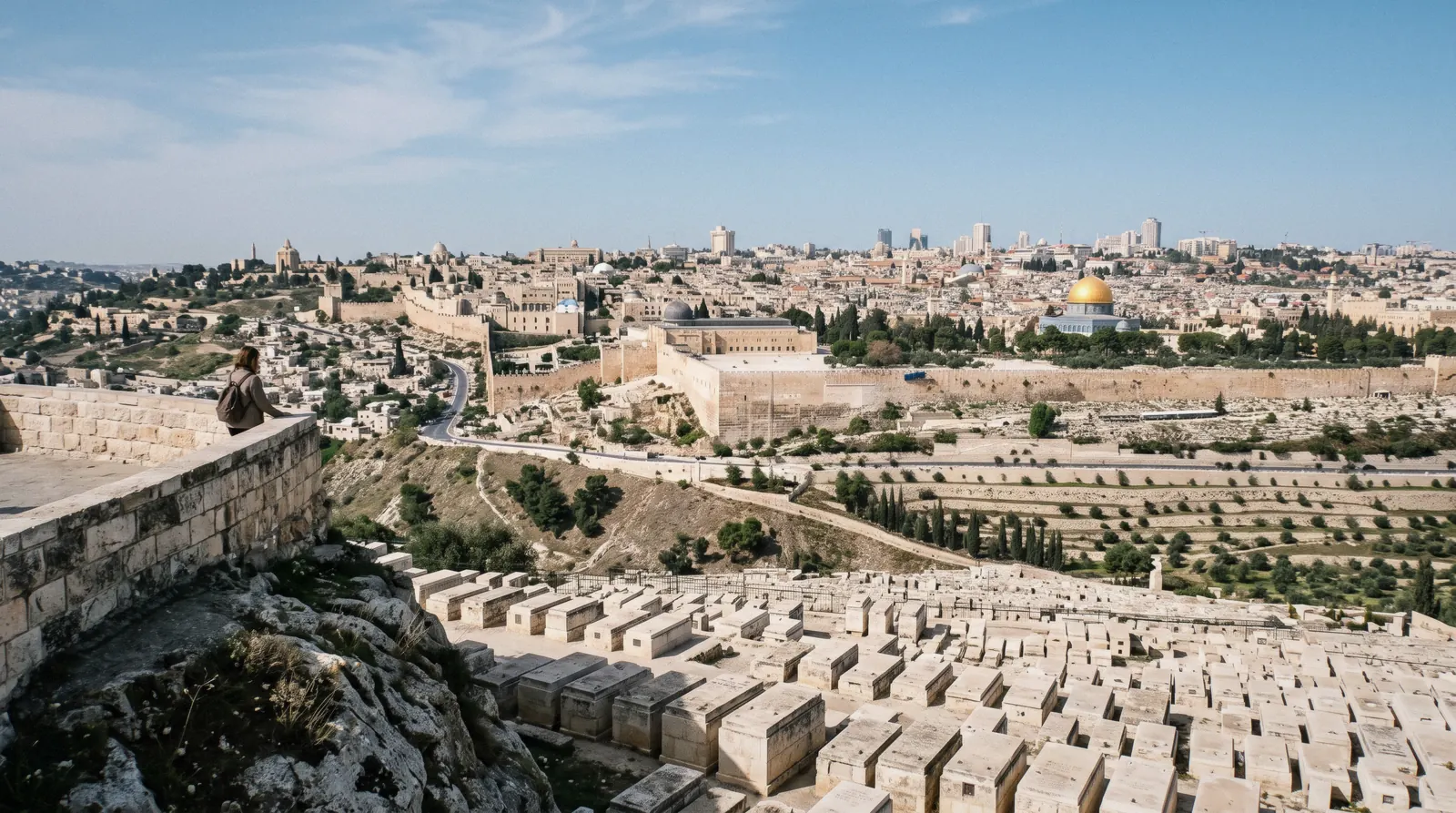
The Mount of Olives is the ridge east of the Jerusalem Old City, named for the olive groves that once covered its slopes. Its western face holds the churches of Gethsemane, a Jewish burial ground in use for over 3,000 years, and the viewpoints every photographer wants. This guide covers what to see, the hours that trip people up, and which of the tours that climb it to book. For the full shortlist, see the top Jerusalem tours.
Quick answer The short answer
The Mount of Olives is a ridge east of the Old City where the Gospels place key events in the life of Jesus, including his arrest at Gethsemane and his ascension. Today it holds the Church of All Nations, the Garden of Gethsemane, the Tomb of Mary, the Dominus Flevit and Pater Noster churches, and a Jewish cemetery with about 150,000 graves. The mount is free to walk, and three guided tours cover it.
Key takeaways
- Gethsemane and the Church of All Nations sit at the foot of the ridge, open from 07:30, last entry 10 minutes before closing.
- The Mount of Olives guided tour is the shortest way to see it, 3.5 hours from Jaffa Gate at from $60.
- For the full arc of the Gospels, the In the Footsteps of Jesus walk runs down the mount and on along the Via Dolorosa.
Key facts
Opening hours
| Church of All Nations, April-September | 07:30–18:00 |
|---|---|
| Church of All Nations, October-March | 07:30–17:00 |
| Dominus Flevit, Mon-Thu and Sat | 08:30–17:00 |
| Chapel of the Ascension | 08:00–17:00 |
Closed Pater Noster closed Sunday, temporary hours Tuesday and Thursday 09:00-12:00. Russian Church of the Ascension closed Sunday.
Admission
- Adult
- Free (the mount itself). Pater Noster $3.88 (12 NIS), students $3.24 (10 NIS). Chapel of the Ascension $1.62 (5 NIS).
Planning it
- Time needed
- Our estimate: half a day to walk the ridge properly, about 2 hours for the churches alone
- Book ahead
- Optional — walk-up usually fine
- Address
- East Jerusalem, east of the Old City across the Kidron valley
Which Mount of Olives tour to book
Three bookable tours cover the mount. They differ in length, what they include and how much of Jerusalem they pair it with, so the table lines them up against each other.
Do you want the mount on its own, the mount plus the Old City, or the whole city in one day?
| Option | Price | Length | Includes | Book |
|---|---|---|---|---|
| Jerusalem: Mount of Olives Guided TourVisitors who want the mount itself, churches and cemetery, at an easy downhill pace | from $60 | 3.5 hours | Transport from Jaffa Gate to the mount, guided walk down past the churches and the old cemetery to Gethsemane. Church entrance fees of about $7.12 (22 NIS) paid on the day | Check Availability |
| Jerusalem Walking Tour: In the Footsteps of JesusTravellers who want the Gospel route from the mount down into the Old City in one day | from $89 | 9 hours | Hotel pickup, the descent past Pater Noster, Dominus Flevit and Gethsemane, then the Via Dolorosa. Entry to Pater Noster and Dominus Flevit not included | Check Availability |
| Jerusalem: Full-Day City TourFirst-time visitors who want Jerusalem covered in a single day, transport and entry fees sorted | from $75 | 10 hours | Hotel pickup, Gethsemane, Mount Zion, the Old City, the Western Wall and the Holy Sepulchre, entry fees included | Check Availability |
Every one of the tours sell tickets that cover the visit itself, since the mount is free and only the small churches charge. On Mondays and Thursdays outside Jewish holidays, the full-day tour substitutes Yad Vashem for Gethsemane. Figures current in Q4 2026.
All Mount of Olives tours
Every tour on this site that climbs the mount, from a half-day walk to full-city days that begin here.
 from $60
Includes the ride up
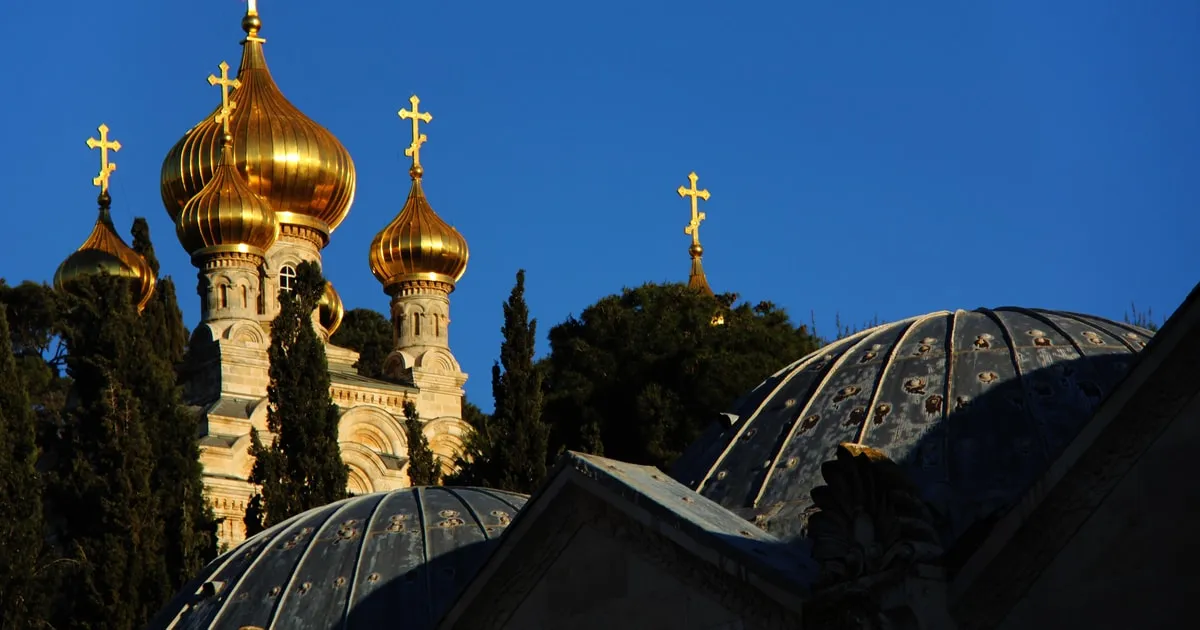
Jerusalem: Mount of Olives Guided Tour
A ride up from Jaffa Gate, then the churches and the old cemetery on foot down to Gethsemane.
Check Availability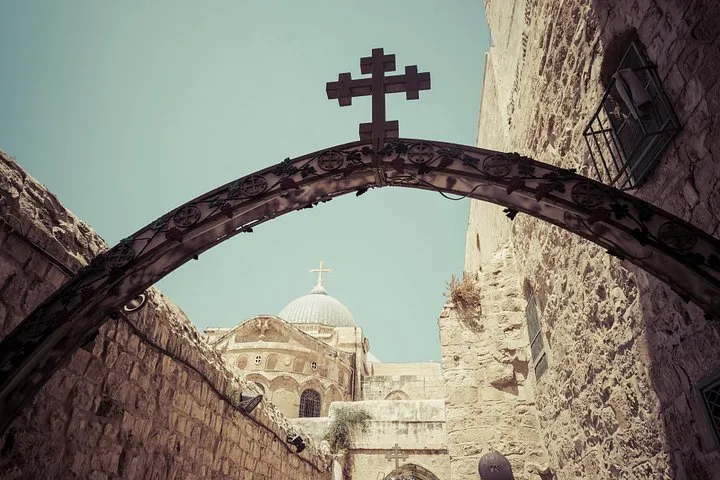 from $89
Christian sites
Jerusalem Walking Tour: In the Footsteps of Jesus
Down the Mount of Olives past Pater Noster, Dominus Flevit and Gethsemane, then the Via Dolorosa in the Old City.
Check Availability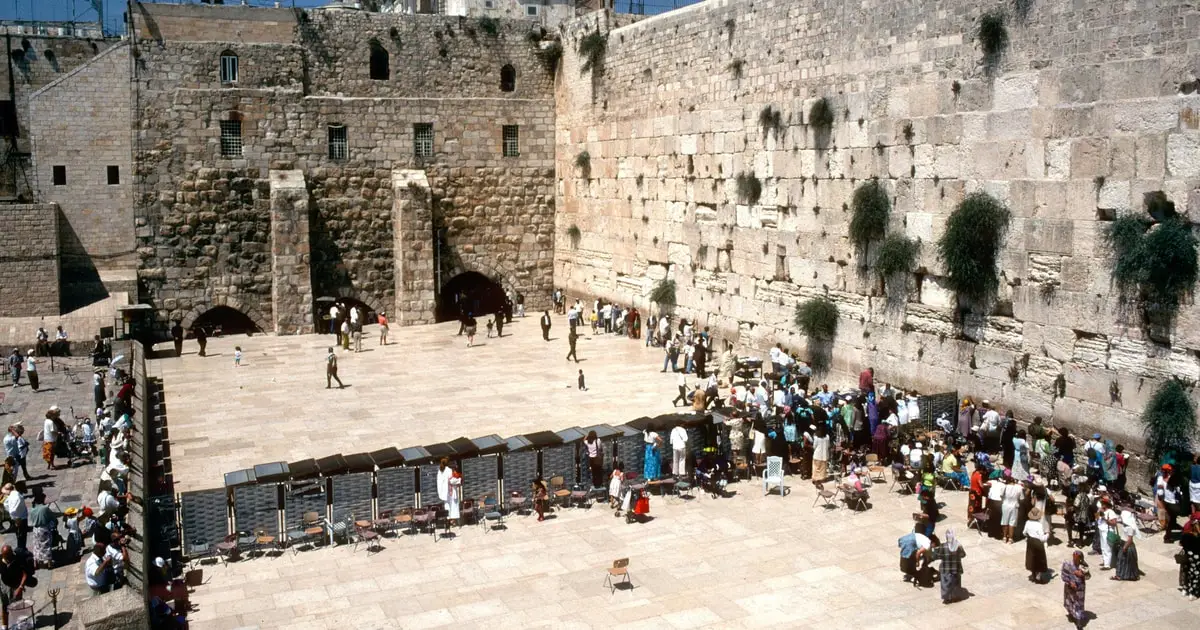 from $75
Pickup included
Jerusalem: Full-Day City Tour
Gethsemane, Mount Zion, the Old City, the Western Wall and the Holy Sepulchre in one day, with hotel pickup.
Check AvailabilityPrices, ratings and details are the platform's own. dollar figures are the listed prices — the platform bills in your account's currency.
What the Mount of Olives is and why it matters
A ridge facing the Old City across a narrow valley, sacred to Jews, Christians and Muslims.
The ridge and its names
The Mount of Olives is a north-south ridge rising directly east of the Old City walls, separated from them by the Kidron valley. Its Hebrew name, Har ha-Zeitim, and its Arabic name, Jabal az-Zaytun, both mean Mount of Olives, a reference to the olive groves that once covered the slopes. The neighbourhood at the top, At-Tur, grew out of a village and takes its name from the Arabic word for the mountain.
Because the ridge faces the Temple Mount, known in Arabic as Haram al-Sharif (the plateau of the Dome of the Rock and the Al-Aqsa Mosque), its summit gives the single most reproduced panorama of the Old City. Photographers come at opening time for the light and again before the churches close.
A burial ground for three millennia
The western slopes, the ones facing Jerusalem, have been used as a Jewish cemetery for over 3,000 years and hold approximately 150,000 graves. In Jewish tradition, burial on the mount was associated with the resurrection, which is why the hillside became so densely packed with tombs. The southern part of the ridge served as the necropolis of the elite of the ancient Kingdom of Judah, and their monumental rock-cut tombs still line the valley floor.
Practical point: the cemetery terraces are active burial ground and the paths down the slope cut through them. Walk the marked paths, keep your voice down, and do not step on graves. The stones are uneven, so wear shoes with grip.
Why Christians come
Several key events in the life of Jesus, as related in the Gospels, took place on the mount, and in the Acts of the Apostles it is described as the place from which Jesus ascended to heaven. That double association, with Jesus and with Mary, has made it a centre of Christian worship since ancient times and a major site of pilgrimage today. Each event now has its church, and the modern pilgrimage route runs downhill from summit to garden in roughly Gospel order: the Ascension at the top, the weeping of Jesus over the city at Dominus Flevit, the agony and arrest at Gethsemane at the bottom.
If you want the whole arc in context, the In the Footsteps of Jesus walking tour follows exactly that line and continues into the Old City.
What you see, in walking order
Most visitors walk the ridge downhill from north to south-west, ending at Gethsemane by the valley. The order below follows the path the tours use.
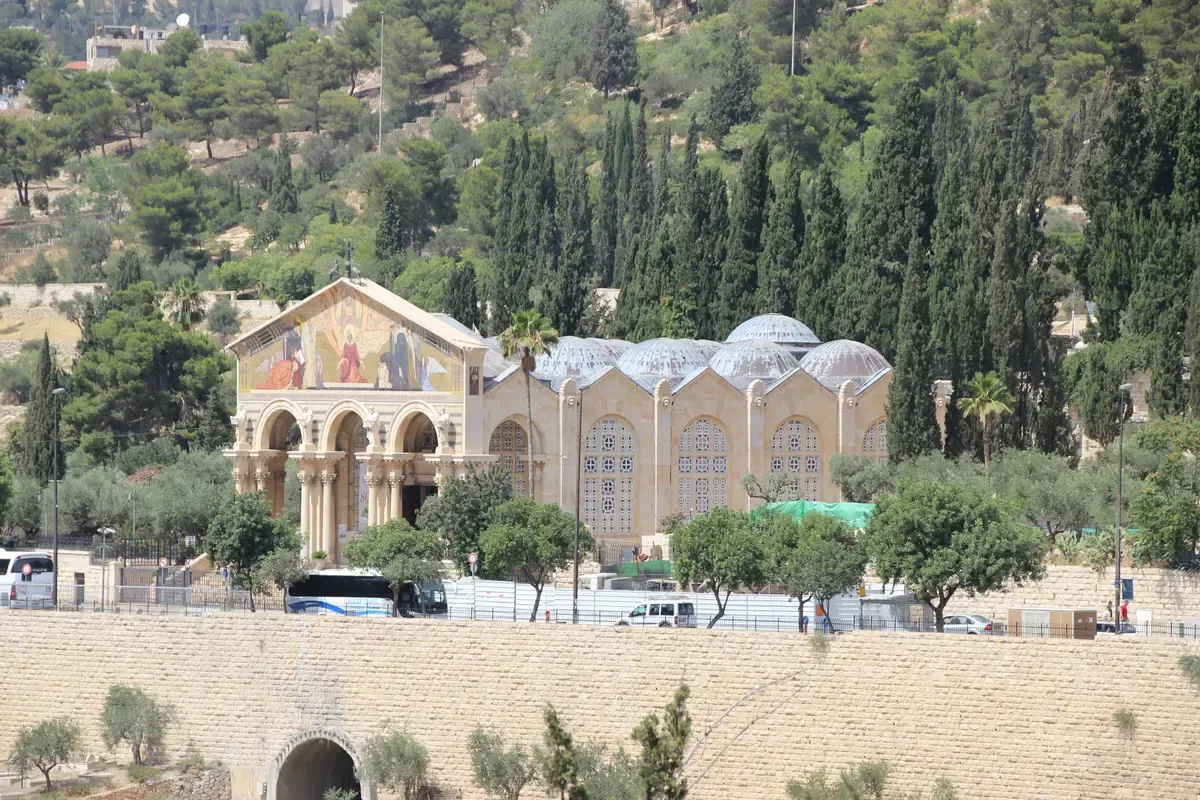
The Church of All Nations at Gethsemane, at the foot of the Mount of Olives. Photo: Gary Todd from Xinzheng, China, CC0, via Wikimedia Commons
Start at the top: Pater Noster and the Chapel of the Ascension
The Church of the Pater Noster stands near the summit over a cave identified with the teaching of the Lord's Prayer. Its courtyard walls are hung with ceramic panels of the prayer in well over a hundred languages, which is the detail people photograph. Entry costs $3.88 (12 NIS), students $3.24 (10 NIS). Hours are currently temporary, Tuesday and Thursday 09:00-12:00, and it is closed Sunday, so check before you build your day around it.
The Chapel of the Ascension, a short walk south, encloses a stone slab venerated as the point from which Jesus ascended to heaven. It opens 08:00-17:00 and entry is $1.62 (5 NIS). Both sites sit at the cool end of the ridge and get almost no shade, so start here early.
Down the slope: the viewpoint and Dominus Flevit
Between the summit churches and the valley, the path crosses the cemetery terraces and opens onto the classic view: the golden Dome of the Rock, the grey dome of the Church of the Holy Sepulchre, and the whole walled rectangle of the Old City. Give this terrace fifteen minutes, because the view explains the geography of everything you will see afterwards in town.
A little further down is the Dominus Flevit church, its name Latin for the Lord wept, marking the spot where Jesus is said to have wept over Jerusalem. The teardrop-shaped chapel frames the city through its altar window, and during construction archaeologists uncovered finds from the Canaanite period and tombs from the Second Temple and Byzantine eras. It opens Mon-Thu and Sat 08:30-17:00, and Fri and Sun 08:30-11:50 and 14:00-17:00. Entry is included on the tours, a small fee if you come alone.
The bottom of the hill: Gethsemane and the Church of All Nations
At the foot of the slope, beside the Tomb of Mary, lies Gethsemane, the garden where, according to the four Gospels, Jesus underwent the agony in the garden and was arrested before his crucifixion. Ancient olive trees still grow in the enclosed grove, and several adjacent church properties each hold their own small grove identified with biblical Gethsemane.
Next door stands the Church of All Nations, also called the Basilica of the Agony, a Catholic church built in the 1920s over a section of bedrock where Jesus is said to have prayed before his arrest. Hours are 07:30-18:00 April-September and 07:30-17:00 October-March, with last entry 10 minutes before closing. It is free. The Tomb of Mary, a Greek Orthodox crusader-era church reached by a wide staircase, opens 08:00-18:00. From here the Western Wall plaza is a short walk across the valley, which is how most people continue their day.
| Site | What marks it | Practical line |
|---|---|---|
| Pater Noster | Courtyard hung with the Lord's Prayer in 100+ languages | $3.88 (12 NIS), Tue and Thu 09:00-12:00 only, closed Sun |
| Chapel of the Ascension | Slab venerated as the ascension point | $1.62 (5 NIS), 08:00-17:00 |
| Dominus Flevit | Altar window framing the Old City | 08:30-17:00 with split Fri and Sun hours |
| Gethsemane | Ancient olive grove of the arrest | Free, garden beside the Tomb of Mary |
| Church of All Nations | Bedrock of the agony, built in the 1920s | 07:30-18:00 summer, 07:30-17:00 winter, free |
The cemetery descent
The walk from summit to garden takes most people 45 minutes to an hour with stops (our estimate), and the middle stretch runs through the burial terraces. This is not a detour, it is the historic landscape itself: roughly 150,000 graves stacked in tiers on the slope that faces the Temple Mount. Stay on the marked paths, dress as you would in any cemetery, and expect to share the narrow stairways with funeral parties.
The surface is loose stone in places, so this stretch is not suitable for wheelchairs, which the tours state plainly.
Hours, dress and quiet times
The mount is always walkable, but every church on it keeps separate hours and several close on Sunday. This is the part most plans get wrong.
Hours that surprise people
Sunday is the trap. Dominus Flevit opens only 08:30-11:50 and 14:00-17:00 on Sundays, Pater Noster is currently closed on Sundays altogether, and the Russian Church of the Ascension closes Sunday too. A Sunday visit still works, because Gethsemane and the Church of All Nations open daily, but the summit churches may be shut.
Pater Noster also runs on temporary hours even midweek, Tuesday and Thursday 09:00-12:00 only. If seeing it matters, plan a Tuesday or Thursday morning, or accept it from the outside. The Church of All Nations is the most reliable anchor: 07:30-18:00 April to September, 07:30-17:00 October to March, last entry 10 minutes before closing, and it closes for a midday break around noon on Sundays. The Tomb of Mary opens 08:00-18:00 daily.
Dress and behaviour
Every site on the ridge is a working place of worship, so covered shoulders and knees are the safe standard everywhere on the mount. The garden of Gethsemane and the Church of All Nations draw large pilgrim groups, and prayer inside the church takes priority over photography, so no flash and no raised voices near the bedrock altar.
The cemetery has its own etiquette. Do not sit on gravestones, do not take posed photographs against them, and give way to funeral processions on the paths. During Jewish holidays the slopes are busy with mourners and visitors, which is respectful traffic rather than tourist traffic.
When it is quiet
The garden and the Church of All Nations are calmest soon after the 07:30 opening, before the first coach groups arrive (our estimate). By mid-morning the lower church fills and the queue for the Tomb of Mary staircase builds. Mid-afternoon is the second good window, especially in winter when the church closes at 17:00 and the light on the Old City walls turns golden around 16:30.
Friday afternoons and Saturday are fine on the mount itself, unlike much of Jewish Jerusalem: churches here stay open through Shabbat, so this is a good best time to visit fallback if the rest of the city has shut for the weekend.
Getting to the Mount of Olives
The mount sits about 20 minutes' walk east of the Old City walls (our estimate), uphill most of the way unless you cheat with a ride.
On foot from the Old City
The classic route leaves the Old City through Lions' Gate, crosses the Kidron valley past the ancient tombs, and climbs to the Church of All Nations and the garden of Gethsemane. From there you either stop or keep climbing the stairways through the cemetery to the summit. Budget about 20 to 25 minutes from Lions' Gate to the garden (our estimate), considerably more with the full climb.
Doing it this way means you see Gethsemane first and the view last, which is the reverse of the tour logic. If the climb worries you, walk it the other way round: start at the top in the cool of the morning and let gravity do the work, exactly as the Mount of Olives guided tour does.
By bus, taxi or tour
City buses run over the ridge from the city centre, stopping near the summit at At-Tur. Taxis and ride-hailing cars will drop you at the top for the downhill walk, which is the cheapest way to get the summit-to-garden direction without a guide. There is no light rail on the mount, and on Shabbat from Friday sunset to Saturday nightfall Israeli public transport stops entirely, so plan a walk or a pre-booked ride, as covered in our getting around guide.
The tours remove every one of these decisions. The Mount of Olives guided tour collects you at Jaffa Gate and drives up, and the two full-day options start with hotel pickup, which matters if you are short on time or visiting in summer heat.
Pairing it with the rest of the city
The mount fits naturally at the start of a day that continues into the Old City, because you end at the bottom of the valley beside the Western Wall. From there the City of David excavations are just south of Dung Gate, and the Via Dolorosa runs through the Muslim Quarter. If you are mapping a whole trip, our Jerusalem itinerary and the wider list of things to do in Jerusalem slot the mount into a longer plan.
- Wear grippy shoes, the cemetery paths are loose stone
- Carry water, the ridge has almost no shade
- Check Pater Noster's temporary hours the day before
| Routing | Best for | The trade-off |
|---|---|---|
| Guided from Jaffa Gate (the Mount of Olives tour) | First visits, no map work, context on every church | Fixed 3.5-hour slot, church fees of about $7.12 (22 NIS) extra on the day |
| Self-guided, summit to garden by bus or taxi up | Photographers, slow walkers, quiet-seekers | You manage the split church hours yourself, especially the Sunday closures |
| On foot from Lions' Gate, garden first then climb | Fit visitors who want the valley tombs too | The climb back is steep, and the view comes last |
How much time to give the Mount of Olives
Anywhere from ninety minutes to half a day, depending on how many of the five church stops you make and how long you sit at the viewpoint.
The realistic timings
A quick visit is Gethsemane, the Church of All Nations and the Tomb of Mary at the bottom of the hill, about ninety minutes total (our estimate). That covers the sites most people mean by the Mount of Olives and pairs neatly with an afternoon in the Old City.
The full ridge, from the Chapel of the Ascension at the top down through Pater Noster, the viewpoint, Dominus Flevit and the garden, takes about half a day with stops. Add time for the view terrace, because on a clear day you can pick out the domes of the Church of the Holy Sepulchre and the Dome of the Rock from the same frame. In July and August, when afternoon highs average 30°C (86°F), start at 07:30 and be off the exposed summit by mid-morning.
When a tour is the better deal
If your Jerusalem stay is tight, a guided option saves the half day of logistics. The Mount of Olives guided tour compresses the whole ridge into 3.5 hours with the ride up included, and it ends you at Gethsemane in time to walk into the Old City for lunch.
If you want the mount and the Gospel route into the Old City without changing guides, the In the Footsteps of Jesus walking tour runs nine hours from hotel pickup down the slope and along the Via Dolorosa, which suits visitors making a single long day of Christian Jerusalem. And if the mount is one item on a longer list, the full-day city tour folds Gethsemane into a ten-hour circuit of the whole city with entry fees included. For a private alternative, our Jerusalem private tours page lists guides who will set the pace with you.
| Routing | Time needed (our estimate) | How |
|---|---|---|
| Garden and Church of All Nations only | about 90 minutes | Walk from Lions' Gate, free entry |
| Summit to garden, all five stops | about half a day | Bus or taxi up, walk down, $3.88 (12 NIS) Pater Noster plus $1.62 (5 NIS) Ascension |
| Ridge plus Via Dolorosa in one day | a full day | The In the Footsteps of Jesus tour, from $89, hotel pickup |
A note on pacing downhill
Downhill sounds easy and is not. The path from summit to garden drops steeply through the cemetery on uneven steps, and knees feel it on the way down more than up. Take the terrace breaks the route offers, and if anyone in your group struggles with steps, choose the routing that stops at the bottom sites and reaches the summit by road instead.
The Mount of Olives through time
From a Judahite necropolis to one of the world's great pilgrimage slopes, in eight dated steps.
-
c. 1000-586 BC
A royal necropolis
The southern slopes of the ridge served as the burial ground attributed to the elite of the ancient Kingdom of Judah.
-
Second Temple era
Burial on the slopes spreads
Tombs from this period were uncovered on the mount, including during building work at Dominus Flevit.
-
Gospel era
Jesus on the mount
The Gospels place key events of the life of Jesus here, including the agony and arrest at Gethsemane.
-
c. AD 30s
The ascension tradition
The Acts of the Apostles describes the mount as the place from which Jesus ascended to heaven, the event marked by the Chapel of the Ascension.
-
Byzantine period
Churches on the ridge
Tombs and remains of the Byzantine era found at Dominus Flevit point to Christian worship on the slope in this period.
-
Over 3,000 years to the present
The Jewish cemetery grows
The western slopes have been used as a Jewish cemetery for over 3,000 years and hold approximately 150,000 graves.
-
1920s
The Church of All Nations rises
The Catholic basilica, also called the Basilica of the Agony, is built at Gethsemane over the bedrock associated with Jesus's prayer.
-
Today
A major pilgrimage site
Because of its associations with Jesus and Mary, the mount remains a centre of Christian pilgrimage, and the viewpoint draws visitors of every faith.
Sources: Wikipedia entries for the Mount of Olives, Gethsemane, the Church of All Nations and Dominus Flevit church. Church hours from the Christian Information Centre.
Do and do not on the Mount of Olives
Six rules that keep the visit smooth and respectful.
Do
- Start at the Church of All Nations when it opens at 07:30, before the coach groups arrive (our estimate)
- Cover shoulders and knees, every site on the ridge is a working place of worship
- Check Pater Noster's temporary hours, currently Tuesday and Thursday 09:00-12:00, before you plan around it
- Take the terrace break at the cemetery viewpoint, it frames the whole Old City
- Book ahead in high season, the Mount of Olives guided tour offers free cancellation up to 24 hours before
- Wear shoes with grip for the loose stone paths through the cemetery
Don't
- Do not visit on a Sunday expecting the summit churches: Pater Noster and the Russian Church of the Ascension close, and Dominus Flevit splits its hours
- Do not step on graves or pose photographs against tombstones on the cemetery terraces
- Do not arrive at the Church of All Nations in the last ten minutes, last entry is 10 minutes before closing
- Do not rely on public transport on Shabbat, from Friday sunset to Saturday nightfall it does not run
- Do not skip water and a hat in summer, the ridge has almost no shade and July highs average 30°C (86°F)
- Do not bring a wheelchair or buggy down the cemetery path, the tours state the route is not suitable for wheelchair users
Five things most visitors do not know
Small facts that change how you read the slope.
The list
Most people rush the ridge in ninety minutes and miss what it is actually showing them. These five details come up on every guided walk and reframe the visit.
- The mount takes its name from real olive groves: both its Hebrew and Arabic names literally mean Mount of Olives, a reference to the groves that once covered the slopes Wikipedia, Mount of Olives
- The western slopes have served as a Jewish burial ground for over 3,000 years and hold approximately 150,000 graves, making the hillside central in the tradition of Jewish cemeteries Wikipedia, Mount of Olives
- The church at Dominus Flevit means the Lord wept in Latin, and while it was being built archaeologists uncovered finds from the Canaanite period and tombs from the Second Temple and Byzantine eras Wikipedia, Dominus Flevit Church
- Several separate small olive groves on adjacent church properties are each identified with biblical Gethsemane, so the garden of the arrest is a set of groves, not one fenced plot Wikipedia, Gethsemane
- The Church of All Nations enshrines a section of bedrock where Jesus is said to have prayed before his arrest, and it was built in the 1920s Wikipedia, Church of All Nations
Mount of Olives map
The summit and the sites most visits include, plus the landmarks on the way down and across the valley.
- 1 Mount of OlivesThe ridge itself, rising east of the Old City and crowned by the At-Tur neighbourhood.
- 2 GethsemaneThe garden at the foot of the slope where the Gospels place the agony and arrest of Jesus.
- 3 Church of All NationsThe 1920s Catholic basilica at Gethsemane, open from 07:30 with last entry ten minutes before closing.
- 4 Church of the Pater NosterSummit church hung with the Lord's Prayer in over a hundred languages, open Tuesday and Thursday mornings only at present.
- 5 Dominus Flevit ChurchTeardrop-shaped chapel whose altar window frames the Old City from the cemetery terraces.
- 6 Western WallAcross the valley at the foot of the Temple Mount plateau, the natural next stop after Gethsemane.
- 7 Lions' GateThe Old City gate nearest the foot of the mount and the start of most walking approaches.
Numbers match the pins on the map.
Near the Mount of Olives
Three places that pair naturally with the ridge, all within a short walk of the bottom of the hill (our estimate).
Western Wall
The retaining wall of the Temple Mount plateau and the holiest site at which Jews can pray, with the Western Wall Tunnels below. It sits directly under the mount, so most visitors pair the two in one morning.
About 10 minutes from Gethsemane, across the valley (our estimate) Read the guideVia Dolorosa
The route of the stations of the cross through the Old City, which the In the Footsteps of Jesus walking tour joins after descending the mount. The Franciscan Way of the Cross walks it every Friday afternoon.
About 15 minutes from Lions' Gate (our estimate) Read the guideCity of David
The archaeological park south of the Old City, with self-guided entry from $5.18 (16 NIS). It continues the ancient story the cemetery on the mount begins, and our City of David guide covers Hezekiah's tunnel.
About 20 minutes from Dung Gate (our estimate) Read the guideMount of Olives questions
What is the Mount of Olives in the Bible?
In the Gospels it is the ridge east of Jerusalem where several key events in the life of Jesus take place, including his agony and arrest at Gethsemane. In the Acts of the Apostles it is described as the place from which Jesus ascended to heaven, and each event is now marked by a church on the slope.
What is currently on the Mount of Olives?
The ridge holds the Church of All Nations and the garden of Gethsemane at its foot, the Tomb of Mary, the Dominus Flevit and Pater Noster churches, the Chapel of the Ascension and a Jewish cemetery of about 150,000 graves on its western slopes. The At-Tur neighbourhood sits at the top. See the full sight list above.
Are the Mount of Olives and Gethsemane the same?
No. Gethsemane is the garden at the foot of the Mount of Olives, where the Gospels place the agony in the garden and the arrest of Jesus. The mount is the whole ridge above it, with several churches and the cemetery. Most visits include both, usually walking downhill from the summit to the garden.
Why did Jesus go to the Mount of Olives?
The Gospels place key events of the life of Jesus on the mount: he taught there, wept over the city at the site of Dominus Flevit, prayed and was arrested at Gethsemane, and ascended to heaven from its summit according to the Acts of the Apostles. The In the Footsteps of Jesus tour follows that sequence.
Why is it called the Mount of Olives?
Its Hebrew name, Har ha-Zeitim, and its Arabic name, Jabal az-Zaytun, both literally mean Mount of Olives, after the olive groves that once covered its slopes. Some of those groves survive in the church properties at Gethsemane, where ancient olive trees still stand in the enclosed garden.
Is the Mount of Olives free to visit?
The ridge and its paths are free, as are the garden of Gethsemane and the Church of All Nations. Three small churches charge: Pater Noster $3.88 (12 NIS) and the Chapel of the Ascension $1.62 (5 NIS), and the Mount of Olives guided tour collects about $7.12 (22 NIS) in church fees on the day.
How long do you need on the Mount of Olives?
About ninety minutes for the garden, the Church of All Nations and the Tomb of Mary, or half a day to include the summit churches and the cemetery viewpoint (our estimate). The Mount of Olives guided tour fits the whole ridge into 3.5 hours with the ride up from Jaffa Gate included.
Can you walk to the Mount of Olives from the Old City?
Yes. The usual route leaves through Lions' Gate and crosses the Kidron valley to Gethsemane, about 20 to 25 minutes (our estimate), with a steep climb after if you want the summit. Buses run over the ridge from the city centre, and our getting around guide covers the transport details.
Prices, hours and terms are set by the venue or operator and confirmed at checkout.
We may earn a commission if you book through one of our links, at no extra cost to you. Full affiliate disclosure