 Jerusalem Israel Tours
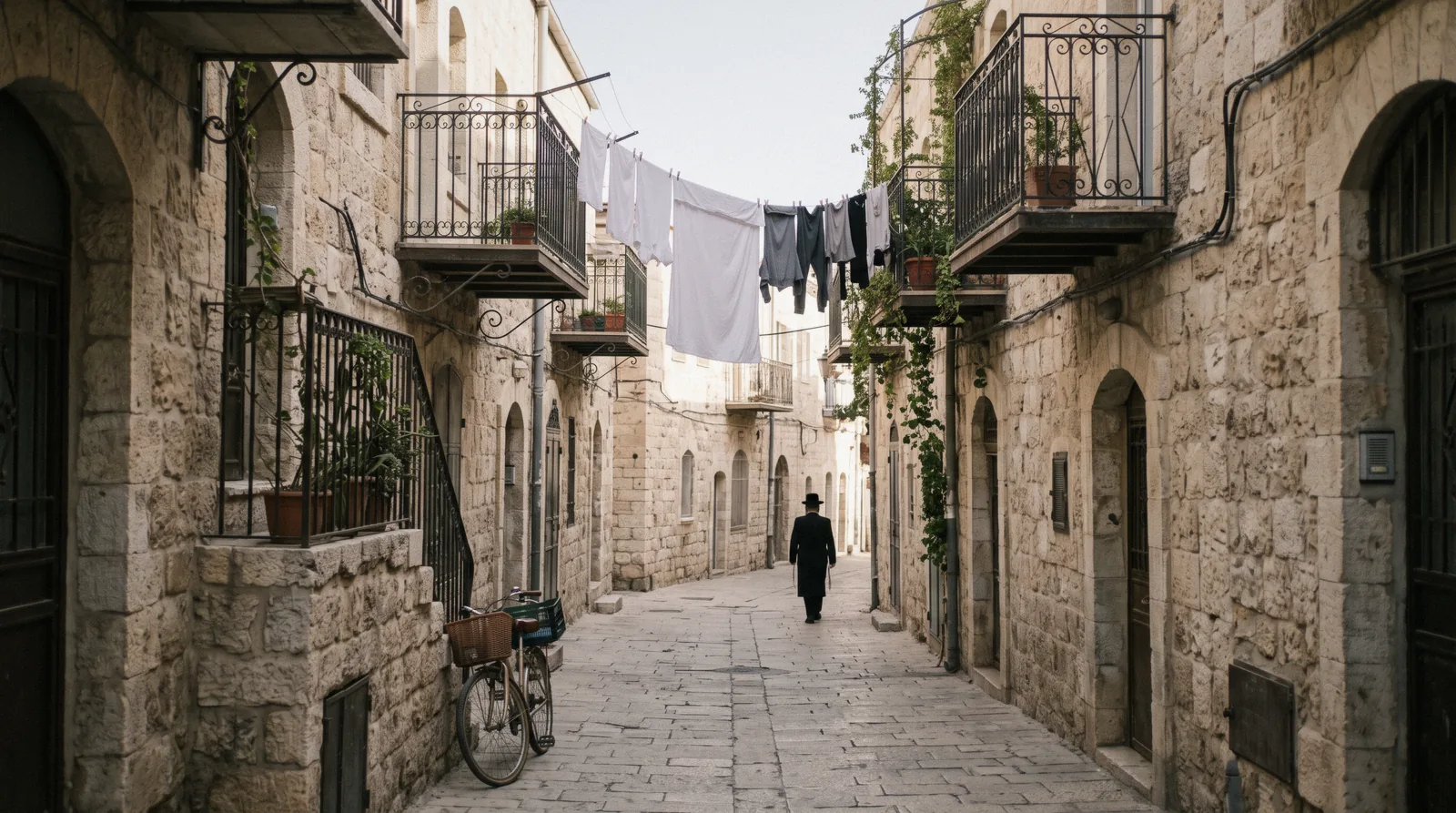
Mea Shearim is one of the oldest Ashkenazi neighbourhoods in Jerusalem outside the Old City, built by members of the Old Yishuv and still home to Ashkenazi Haredi Jewish families. It is a residential quarter with its own rules, not a sight with a ticket gate, so a short guided walk is the easiest way in. This guide covers the dress code, the Shabbat timing and the tours that visit it. For the full shortlist, see the top Jerusalem tours.
Quick answer Visiting Mea Shearim in one look
Mea Shearim is a residential ultra-Orthodox neighbourhood in Jerusalem, one of the oldest Ashkenazi quarters built outside the Old City by the Old Yishuv. Entry to the streets is free. Visit modestly dressed, stay quiet, avoid Shabbat, and go with a guide such as the walk led by a former community member to understand what you are seeing.
Key takeaways
- The streets are free and public, but modest dress is required on every guided visit: see the walking tours of the neighbourhood.
- Shabbat, from Friday sunset to Saturday nightfall, is the wrong time to come: plan around it with getting around Jerusalem.
- Pair the visit with the Mahane Yehuda market or fold it into the things to do in Jerusalem shortlist.
Key facts
Opening hours
| Public streets | Any day except Shabbat for a visit |
|---|
Closed Open every day as a residential neighbourhood. Avoid Friday sunset to Saturday nightfall (Shabbat), when residents observe the day of rest.
Planning it
- Time needed
- Our estimate: 1.5 to 2.5 hours, or a full morning combined with the market
- Book ahead
- Optional — walk-up usually fine
- Address
- Mea Shearim, Jerusalem, north of Jaffa Road near Davidka Square
Mea Shearim tours compared
Three guided walks cover Mea Shearim and the ultra-Orthodox streets of West Jerusalem. All are on foot, all are in English, and all offer free cancellation up to 24 hours before the start. There are no entry tickets for the neighbourhood itself, so the price you see is the whole cost of the guided option.
Do you want a deep dive with someone raised in the community, a cheaper small-group walk, or a broader West Jerusalem day that ends with food?
| Option | Price | Length | Includes | Book |
|---|---|---|---|---|
| Jerusalem: Meet Orthodox Jews on a Tour by a Former MemberTravellers who want the insider explanation and the highest rating | from $53 per person | 2.5 hours | A guide who grew up in the community, no entry fees | Check Availability |
| Jerusalem Jewish Orthodox Neighborhood Walking TourBudget travellers, families with strollers and wheelchair users | from $49 per group | 2.5 hours | Groups of 20 at most from Davidka Square, wheelchair accessible, no entry fees | Check Availability |
| West Jerusalem: Offbeat Walk with Tastings at Machane YehudaVisitors who want the neighbourhood plus the Russian Compound and market tastings | from $162 per person | 4 hours | Notre Dame rooftop ticket and tastings included | Check Availability |
The $49 option is priced per group, so it is by far the cheapest per person for a couple or family. Figures current in Q4 2026.
Bookable tours that visit Mea Shearim
All three walks below include the ultra-Orthodox streets and run in English on foot. Each can be cancelled free up to 24 hours before the start.
 from $53
Insider guide
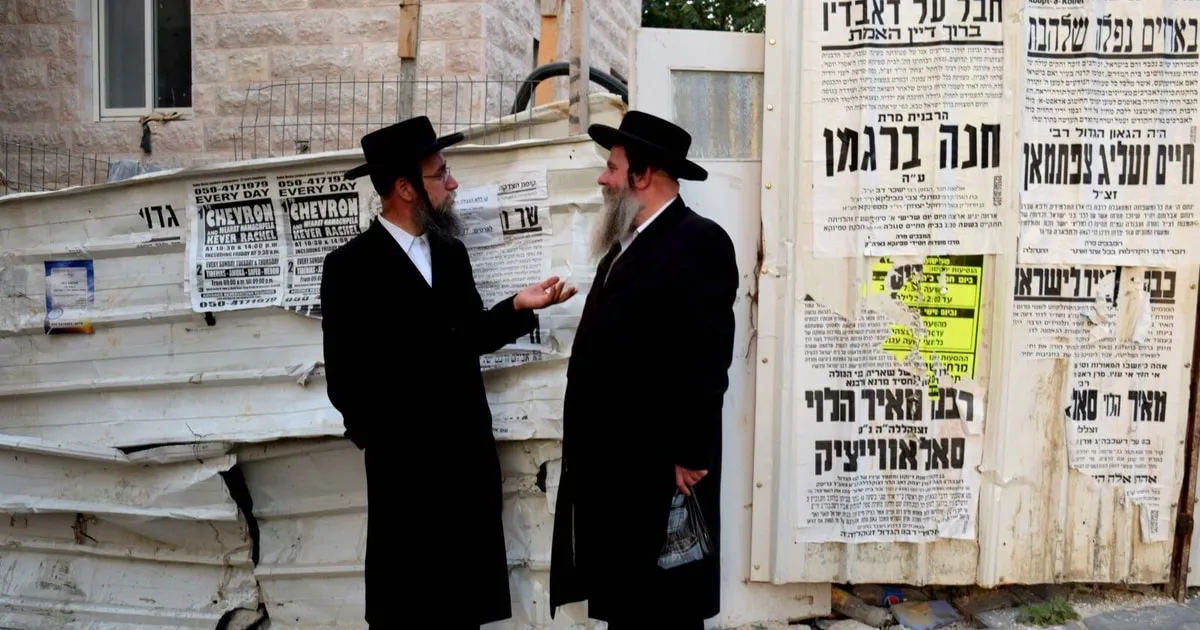
Jerusalem: Meet Orthodox Jews on a Tour by a Former Member
Two and a half hours in a traditional ultra-Orthodox neighbourhood with a guide who grew up in the community.
Check Availability from $49
Small group
Jerusalem Jewish Orthodox Neighborhood Walking Tour
Davidka Square, then a guided walk through ultra-Orthodox streets, in groups of 20 at most.
Check Availability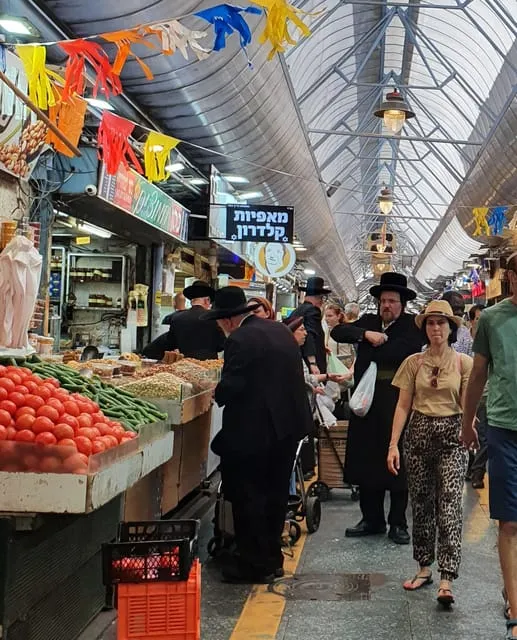 from $162
New listing
West Jerusalem: Offbeat Walk with Tastings at Machane Yehuda
The Russian Compound, the Notre Dame rooftop and an Orthodox neighbourhood, ending with tastings in Mahane Yehuda.
Check AvailabilityPrices, ratings and details are the platform's own. dollar figures are the listed prices — the platform bills in your account's currency.
What Mea Shearim is and why it matters
A short orientation before you choose a walk, so the streets make sense when you reach them.
One of the oldest quarters outside the walls
Mea Shearim is a neighbourhood in Jerusalem and one of the oldest Ashkenazi neighbourhoods built outside the Old City walls. It was constructed by members of the Old Yishuv, the Jewish community that lived in the land before the modern era. That history matters for visitors: unlike the reconstructed quarters inside the Old City of Jerusalem, this is a quarter that has kept a single community and a single way of life in place.
The practical consequence is that you are walking through someone's home streets, not an open-air museum. Synagogues, schools and shops all function around you. The area sits north of Jaffa Road, a short walk from Davidka Square, which is where one of the guided walks begins.
- Free to enter, the streets are public
- No ticket office and no fixed opening hours
- Respectful behaviour is the only entrance requirement
Who lives there and how the community works
The neighbourhood is populated by Ashkenazi Haredi Jews, sometimes described in English as ultra-Orthodox. Residents organise life around religious observance, and the weekly rhythm is set by Shabbat, the Jewish day of rest, which runs from a few minutes before sunset on Friday until three stars appear on Saturday night.
During Shabbat the neighbourhood changes completely. Observant Jews refrain from work activities, and Israeli public transport stops as well: the light rail ends before sunset on Friday and does not run on Saturday. Visitors who ignore this rhythm find shuttered streets and unhappy residents. Plan any visit, guided or alone, for a weekday. If your trip is tight on days, an itinerary for Jerusalem will help you slot the quarter in.
What you see on a walk through the neighbourhood
The sights of Mea Shearim are not monuments but scenes: a way of life carried on in public. A guided walk sequences them and explains them.
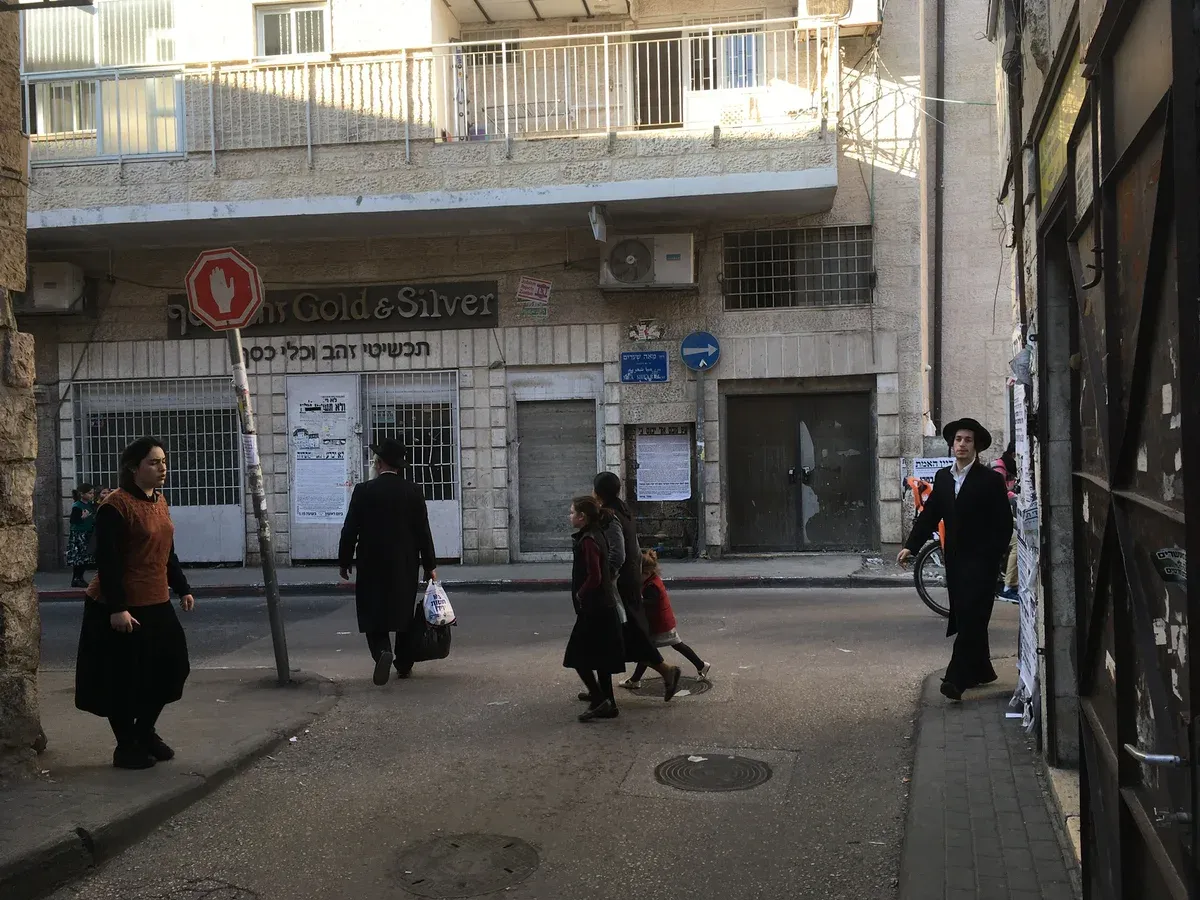
A street in Mea Shearim. Photo: דגש חזק, CC BY-SA 4.0, via Wikimedia Commons
The approach from Jaffa Road
Most visits start from the south, near Davidka Square on Jaffa Road, where the Orthodox neighbourhood walking tour meets. The change is quick. Within a few minutes the shop signs, the clothing and the pace of the street shift from the modern city to the traditional quarter.
The meeting point for the tour by a former community member is Ha-Nevi'im Street 67, just east of the quarter, which lets the guide set the scene on the way in. Either approach takes only a few minutes on foot, and both starting points are easy to reach by the light rail that runs along Jaffa Road.
- Davidka Square, the practical gateway to the quarter
- Ha-Nevi'im Street, the meeting street for the insider walk
Inside the streets
Within the quarter you see the daily markers of Haredi life: men in dark suits and hats, women and girls dressed modestly, boys heading to and from religious schools, small shops, study houses and synagogues. Signs posted at the entrances ask visitors to dress modestly and to keep noise down.
A guide is what turns these scenes into understanding. On the walk led by a former community member, the guide grew up in the community and can explain from the inside what the clothing signals, how schooling and family life are organised and how residents earn a living. Without that context, a visitor tends to see only surfaces. If you prefer a private pace for questions, a private tour of Jerusalem can be shaped around the same streets.
Hours, dress code and quiet times
The rules of a visit are simple but strict, and they come from the residents, not from a ticket office.
When to come and when to stay away
As a residential neighbourhood there are no official opening hours, and the streets are public all day. The one hard rule is Shabbat. Shabbat begins a few minutes before sunset on Friday and ends at nightfall on Saturday, and during that time the community rests and public transport does not run. Do not plan a visit in that window.
Our estimate for the calmest hours is a weekday morning outside Jewish holidays, when school runs and shopping give the streets life without crowding. Late afternoon light is good for photography from the public street, but always ask before photographing people. On hot days remember that Jerusalem afternoons can reach 30°C (86°F) in midsummer, so morning is kinder: more on that in the best time to visit Jerusalem.
- Weekday morning, our estimate for the best window
- Never Friday sunset to Saturday nightfall
- Free cancellation on the tours up to 24 hours ahead lets you move the slot
The dress code, spelled out
Modest dress is required by the community at the entrances and enforced by the tour operators. For the former member's walk that means a scarf or shawl for women, and no shorts or bare shoulders for anyone. The small-group walk asks the same of men and women.
Long trousers or a long skirt, covered shoulders and comfortable closed shoes will pass everywhere in the quarter, and the same outfit will serve you at the Western Wall afterwards, so it is worth dressing for both in one morning. Bring a light layer even in summer. Between the dress code and the quiet street manners, this is the one corner of Jerusalem where what you wear genuinely shapes the visit.
Getting to Mea Shearim
The quarter sits just north of Jaffa Road in central West Jerusalem, close enough to walk from several major hubs.
On foot and by light rail
The simplest route is on foot from Jaffa Road. The light rail's L1 line runs from Mount Herzl past the Central Bus Station, the Mahane Yehuda market, Jaffa Road and City Hall toward Damascus Gate, and a stop near Jaffa Road puts you a short walk from the quarter. Pay with a Rav-Kav card or an approved app, since validators take no bank cards. Our estimate is that from Davidka Square you reach the edge of the neighbourhood in a few minutes on foot.
If you are coming from Tel Aviv, trains reach Jerusalem Yitzhak Navon station next to the Central Bus Station in about 35 to 45 minutes, every 30 minutes Sunday to Thursday and hourly on Friday until early afternoon, with no trains from Friday afternoon until after dark on Saturday. From the station the walk or a short ride brings you up to Jaffa Road. Full detail is in our Tel Aviv to Jerusalem guide.
- Light rail L1 along Jaffa Road, Rav-Kav card needed
- Yitzhak Navon station for arrivals from Tel Aviv and the airport
Combining it with the rest of central Jerusalem
The quarter sits well for a half-day loop. From its edge it is a short walk to the Mahane Yehuda market to the south-west, and the Old City gates are a longer but reasonable walk or one tram stop away, with Damascus Gate the closest entrance to the north.
Remember the Shabbat clock when you build the loop. The market closes for Shabbat and the light rail stops, while churches in the Old City stay open, so a Friday plan should put Mea Shearim and the market first and save church visits for Saturday. If you would rather not think about any of this, a guided walk solves the sequencing for you.
How much time to give it
The quarter rewards a focused visit rather than a long one, and it pairs naturally with central Jerusalem sights.
Choosing your routing
Both dedicated walks run 2.5 hours, which our estimate matches as the right dose for the quarter itself. The choice is what you bolt onto it. A standalone morning keeps the visit short and sharp. Pairing it with the market adds food and colour and is the option most first-time visitors enjoy most, especially the offbeat walk that ends with tastings at Mahane Yehuda.
A third routing folds the neighbourhood into a bigger West Jerusalem day and leaves the Old City for another day, which suits travellers with three or more days in the city, as laid out in our Jerusalem itinerary. Trying to add the Old City on the same morning makes the day long and rushed, so treat that as the fallback, not the plan.
| Routing | Time needed, our estimate | Best for |
|---|---|---|
| Guided walk only | 2.5 hours, standalone | Travellers with one free morning |
| Walk plus the market | 4 to 5 hours with tastings | First-time visitors who want food and context |
| West Jerusalem loop with Russian Compound and rooftops | 4 hours guided, more if extended | Repeat visitors who have already seen the Old City |
A visit around the Shabbat clock
The weekly rhythm decides when a visit works. This is how the days line up.
-
Sunday to Thursday
Best days for the walk
Public transport runs normally, the light rail serves Jaffa Road, and both dedicated guided walks are available.
-
Weekday morning
Our estimate for the quietest visit
Our estimate: mornings outside Jewish holidays bring everyday street life with the least pressure on residents.
-
Friday, daytime
Last workable window
The light rail ends before sunset on Friday, so any Friday visit must finish by mid-afternoon at the latest.
-
Friday, a few minutes before sunset
Shabbat begins
Shabbat starts a few minutes before sunset on Friday, and the community refrains from work for the day of rest.
-
Friday evening
Do not visit
Streets are quiet and residents observe the festive first meal at home, so visitors stay away.
-
Saturday
The day of rest
Shabbat continues until three stars appear on Saturday night, with public transport stopped across the city.
-
Saturday, after nightfall
The city restarts
Transport resumes after dark on Saturday, and normal visiting resumes from Sunday morning.
-
Any day
Book the walk in advance
All three guided visits allow free cancellation up to 24 hours before the start, so reserve early and adjust.
Sources: the Shabbat description and light rail schedule in our research files, and the tour listings for the meeting points and cancellation terms.
Dos and don'ts in Mea Shearim
Do
- Dress modestly: long trousers or a long skirt, covered shoulders, and a scarf or shawl for women on the guided walks
- Keep your voice low and let daily life carry on around you
- Ask before photographing any person
- Go with a guide, ideally one who can explain the community from the inside
- Visit on a weekday morning, our estimate for the calmest window
- Book ahead, since free cancellation up to 24 hours before makes it risk-free
Don't
- Do not enter during Shabbat, from Friday sunset to Saturday nightfall
- Do not wear shorts or bare shoulders, on any tour and ideally not at all
- Do not treat residents as photo subjects or exhibits
- Do not expect bars, cafes or tourist services in the streets, this is a residential quarter
- Do not plan the light rail for Saturday, it does not run
- Do not combine the visit with the market on a Friday afternoon, the market closes for Shabbat
Five things most visitors do not know
Small facts that change how a visit feels.
The list
- Mea Shearim is one of the oldest Ashkenazi neighbourhoods in Jerusalem built outside the Old City walls, which is why its street life looks so unlike the rest of the city Wikipedia.
- It was built by members of the Old Yishuv, the pre-modern Jewish community of the land, not by modern-era immigrants Wikipedia.
- The population today is Ashkenazi Haredi Jews, the community English speakers often call ultra-Orthodox Wikipedia.
- Shabbat is counted from sunset to sunset, so the day of rest begins on Friday evening and lasts until three stars appear on Saturday night Wikipedia.
- The Shabbat stops the city, not just the quarter: the light rail ends before sunset on Friday and does not run on Saturday operator information.
Mea Shearim on the map
The neighbourhood and the nearby sights worth pairing with it.
- 1 Mea ShearimThe ultra-Orthodox quarter itself, free to walk with a modest dress code and no visits during Shabbat.
- 2 Davidka SquareThe light rail square on Jaffa Road where the small-group Orthodox neighbourhood walk meets.
- 3 Mahane Yehuda MarketJerusalem's great produce market, a short walk away and closed for Shabbat, with food tours of its own.
- 4 Russian CompoundA 19th-century complex in central West Jerusalem, included on the offbeat walk with market tastings.
- 5 Damascus GateThe northern gate of the Old City, the closest wall entrance to the quarter and a ten-minute walk, our estimate.
- 6 Jerusalem Yitzhak Navon railway stationThe rail hub for arrivals from Tel Aviv and the airport, next to the Central Bus Station.
Numbers match the pins on the map.
Near Mea Shearim
Three places that pair naturally with a morning in the quarter.
Mahane Yehuda Market
Jerusalem's main market, busy with stalls and small eateries, and it closes for Shabbat. The offbeat walk with tastings links the two in one afternoon.
About 10 minutes on foot (our estimate) Read the guideThe Old City of Jerusalem
The walled city with the Western Wall and the Church of the Holy Sepulchre is the natural second half of any Jerusalem day. Save it for a different half-day than the quarter if you can.
About 20 minutes on foot to Damascus Gate (our estimate) Read the guideYad Vashem
The Holocaust remembrance centre on Mount Herzl sits on the L1 light rail line that serves Jaffa Road. Entry is free with advance registration, and the museum closes on Saturday.
A short light rail ride (our estimate) Read the guideMea Shearim: questions visitors ask
What does the name Mea Shearim mean?
The commonly cited Hebrew origin of the name is not covered in the sources behind this guide, so we leave it unstated rather than guess. What matters practically is the place itself: a Haredi residential quarter, one of the oldest Ashkenazi neighbourhoods outside the Old City. The guided walk by a former community member is the best way to hear the story from residents' side.
Is it safe to visit Mea Shearim?
We do not rate safety. It is a residential neighbourhood that welcomes respectful visitors, and the practical rules are about behaviour: modest dress, quiet voices and no visits during Shabbat. Conditions anywhere change, so check your own government's travel advice. A guided walk keeps you on the right streets with the right etiquette.
Do I have to book a tour, or can I walk in on my own?
The streets are public and free, so you can walk in on your own outside Shabbat and dressed modestly. What you lose is context, since nothing is labelled and no signs explain the community. For understanding rather than looking, the 2.5-hour walk led by a former community member is our pick.
What should women wear in Mea Shearim?
Modest dress is required by the community and enforced by the operators. On the guided walks that means a scarf or shawl for women, no shorts and no bare shoulders for anyone, men included. A long skirt or trousers with covered shoulders passes everywhere, and the same outfit works later at the Western Wall.
Can I visit on a Saturday?
No. Shabbat runs from a few minutes before sunset on Friday until three stars appear on Saturday night, and the community observes the day of rest throughout. Public transport also stops, with the light rail ending before sunset on Friday and not running on Saturday. Come on a weekday instead, and check getting around Jerusalem for the transport implications.
How long does a visit take?
The guided walks run 2.5 hours, which our estimate matches as right for the quarter on its own. Add the Mahane Yehuda market and you have a four to five hour half-day, especially on the walk that ends with market tastings. See the routing table above for all three combinations.
How do I get there by public transport?
Take the L1 light rail along Jaffa Road and get off near City Hall or Davidka Square, then walk a few minutes north, our estimate. You need a Rav-Kav card or an approved app because validators take no bank cards. Full routes and fares are covered in our getting around guide.
Which Mea Shearim tour is best for families?
The Orthodox neighbourhood walking tour is the family pick: it is priced per group at $49, takes at most 20 travellers, welcomes strollers and all ages, and is wheelchair accessible. It runs the same 2.5 hours as the insider walk, and both allow free cancellation up to 24 hours before the start.
Prices, hours and terms are set by the venue or operator and confirmed at checkout.
We may earn a commission if you book through one of our links, at no extra cost to you. Full affiliate disclosure